
Progesterone vs progestogens explained: benefits, risks and menopause hormone therapy options
The terms progesterone and progestogen are often used interchangeably, but they are not the same thing. All progesterone is a progestogen, but not all progestogens are progesterone.

What is progesterone?
Progesterone is the hormone naturally produced by the corpus luteum after ovulation and by the placenta during pregnancy. In menopausal hormone therapy (MHT), micronised progesterone is body-identical to human progesterone and is formulated to improve oral absorption.
It helps protect the endometrium, supports sleep via allopregnanolone (neuro steroid) and GABA-A receptor modulation, balances oestrogen stimulation and has favourable metabolic and cardiovascular effects.
It provides numerous roles in the body:
Prepares the uterus for pregnancy
Protects the endometrium
Balances oestrogen stimulation
Promotes deep sleep
Provides a calming effect within the brain
Supports normal breast physiology
May have favourable cardiovascular and metabolic effects
The progesterone used in modern MHT is micronised progesterone, which is chemically identical (body-identical) to human progesterone, has its origins in plants, particularly Wild yams and soybeans which contain diosgenin, a steroid precursor or building block for progesterone. Micronising the progesterone improves oral absorption.
What are progestogens?
A progestogen is an umbrella term used to describe any substance that activates the progesterone receptor and protects the endometrium from oestrogen-induced overgrowth. Progestogens include both natural progesterone and synthetic compounds called progestins (or synthetic progestogens).
Synthetic progestogens were developed to improve oral bioavailability, potency and duration of action. Many also interact with androgen (steroid hormones), glucocorticoid (metabolic regulation and stress response) or mineralocorticoid (electrolyte and fluid balance) receptors, contributing to different clinical effects and adverse-effect profiles.
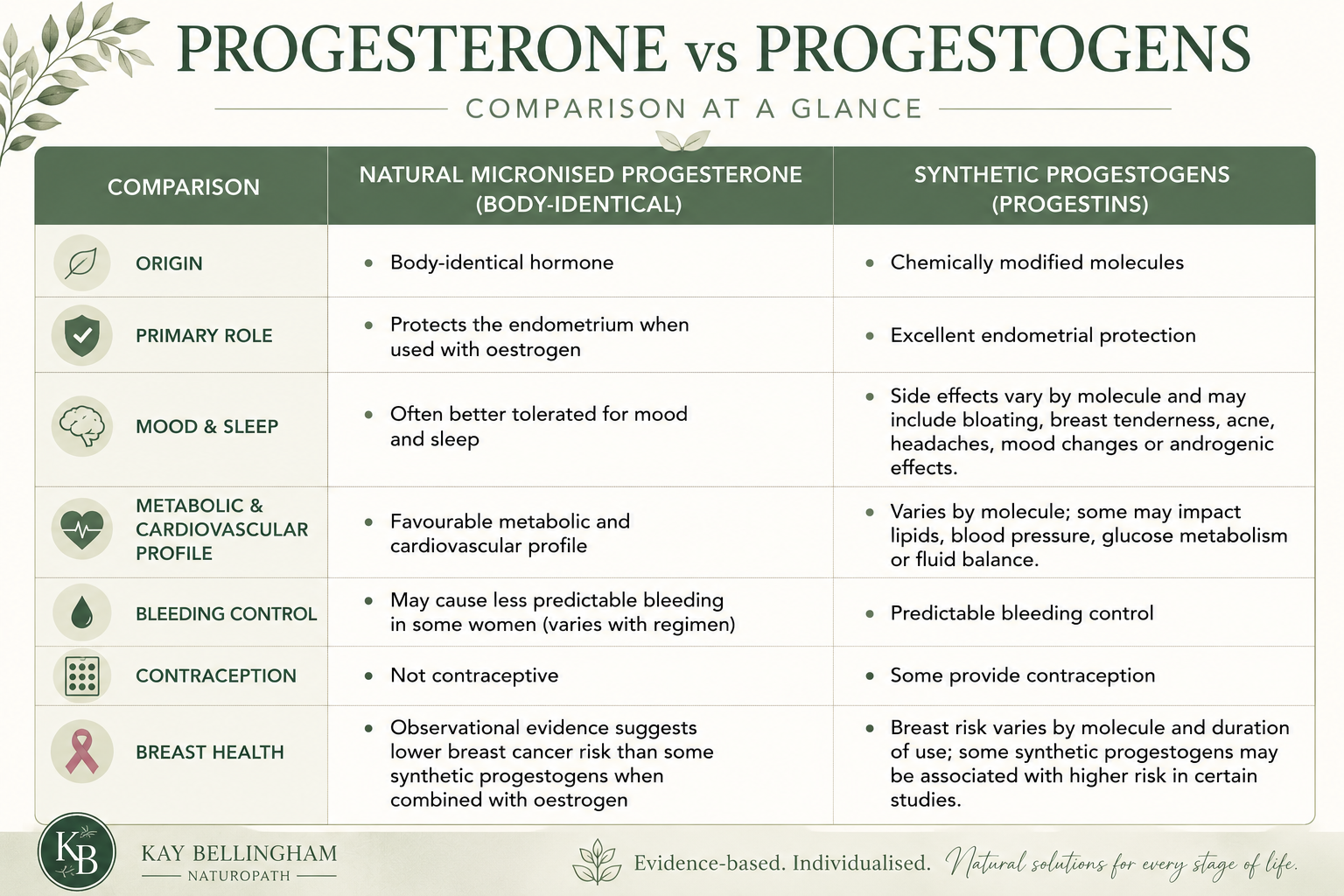
Common Australian MHT progestogen preparations
Micronised progesterone:
• Prometrium
• Bijuva
• Estrogel Pro
Synthetic progestogens:
• Dydrogesterone – Femoston, Femoston Conti
• Norethisterone – Kliovance, Kliogest, Trisequens, Estalis patches
• Medroxyprogesterone acetate – Provera, Ralovera
• Drospirenone – Angeliq
• Levonorgestrel – Mirena (commonly used with systemic oestrogen)
Clinical considerations
Women with an intact uterus using systemic oestrogen require progesterone or another progestogen to prevent endometrial hyperplasia and reduce the risk of endometrial cancer. Women who have had a hysterectomy generally do not require a progestogen unless there are specific clinical indications.
You don't have to navigate menopause alone
Understanding your hormone therapy options can feel overwhelming, especially when every woman's experience is different. My role is to help you make sense of the science, understand what's happening in your body and develop a personalised plan that supports both your symptoms today and your long-term health.
Whether you're preparing for menopause, experiencing symptoms now or reviewing your current treatment, together we can create a strategy that helps you move forward with confidence.
Book your personalised telehealth menopause consultation today and start your journey towards feeling informed, supported and empowered.
References:
Stevenson JC, et al. Drugs Context. 2020;9:2020-10-1.
North American Menopause Society. Menopause. 2022;29(7):767–794.
Australasian Menopause Society. MHT Information Sheets and Dose Guide.
Kim Y, et al. The 2025 Menopausal Hormone Therapy Guidelines.