
In Part 1, we followed a meal through the digestive system. Part 2 explored intestinal permeability, often called “leaky gut”. Now we turn to two conditions that can both cause abdominal pain and changes in bowel habits. Irritable bowel syndrome (IBS) involves changes in how the gut and brain communicate. Inflammatory bowel disease (IBD) involves ongoing inflammation that can damage the digestive tract.
IBS and IBD at a glance
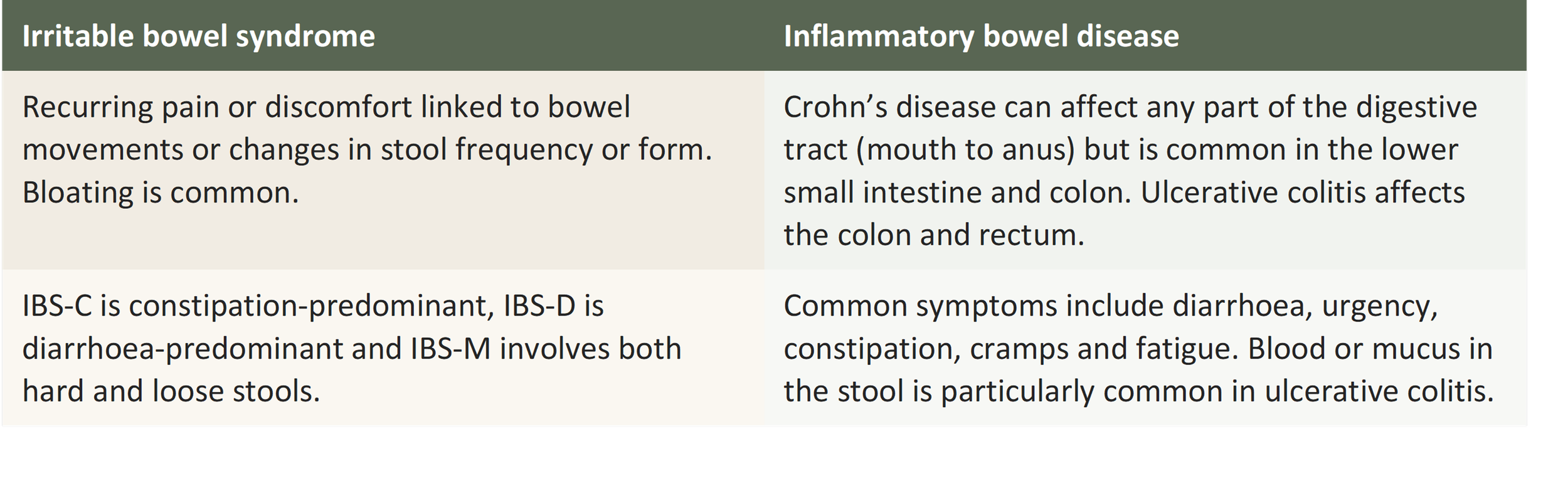
In Australia, at least 3.5% of people are estimated to have IBS, although estimates vary with the criteria used. Crohn’s & Colitis Australia estimated that about 179,000 Australians were living with IBD in 2025.

What causes symptoms or makes them worse
Both IBS and IBD symptoms are multi-factorial and can differ from person to person.
IBS
A sensitive gut can register ordinary amounts of gas or stool as pressure, bloating or pain. When stool moves slowly through the colon, more water is absorbed, leaving it hard and dry (constipation). When it moves quickly, less water may be absorbed, contributing to loose stools and urgency (diarrhoea).
Fermentation can produce gas, which may feel uncomfortable if the gut is particularly sensitive. A gut infection can precede IBS, and stress, large meals or certain fermentable carbohydrates (FODMAPS), dysregulation of the gut-brain axis and alterations to gut flora can bring on symptoms.
IBD
Genetics, the immune system, alterations to gut flora, changes to serotonin signalling and environmental factors can all play a role. Smoking can worsen Crohn’s disease. Food or stress can make symptoms feel worse even when inflammation is not present. IBD can alternate between periods of active inflammation and remission. New or worsening symptoms may reflect a flare or an infection and are worth discussing with your health professional.
When to get checked
It’s best to seek medical assessment for blood in the stool, unexplained weight loss, persistent diarrhoea that wakes you at night or a new, ongoing change in bowel habits. A stool test called faecal calprotectin can help check for bowel inflammation. If IBD is suspected, a colonoscopy, sometimes in conjunction with a gastroscopy, with biopsies may be needed. IBS can often be diagnosed from a characteristic symptom pattern and targeted tests i.e. blood, bowel, RAST, breath and antibodies.
Does gluten worsen IBS or IBD?
Gluten triggers an immune reaction and intestinal damage in coeliac disease. If wheat brings on IBS symptoms, fructans, a type of fermentable carbohydrate in wheat, may be responsible. In one blinded trial of people reporting gluten sensitivity, fructans caused more symptoms than gluten. Gluten avoidance is not a routine treatment for IBD inflammation. If coeliac disease is suspected, keep eating gluten until you’ve discussed testing with your health professional.
What can help with IBS?
Regular meals (avoiding trigger foods and incorporating fibre) following a Mediterranean style diet, adequate hydration, physical activity and gut-directed hypnotherapy can help manage symptoms. If diarrhoea or urgency is the main concern, it can help to notice whether caffeine or large, high-fat meals make it worse. Following a low-FODMAP diet for a short period of time can help identify food triggers, followed by reintroduction to help broaden out the diet.
Some useful complementary medicines include:
Psyllium provides soluble fibre that can help bowel regularity, especially in IBS-C. Start gradually and increase water intake, as increasing fibre too quickly can add to bloating
Enteric-coated peppermint oil may ease cramps, although it can worsen reflux
Probiotics are positively associated with less abdominal pain and a general improvement in symptoms and include Saccharomyces boulardii (SB) for diarrhoea or Lactobacillus rhamnosus (GG) for constipation
Globe artichoke can help reduce IBS symptoms including abdominal pain, cramping, bloating, flatulence and constipation associated with IBS-C and has produced good results for the treatment of dyspepsia (indigestion)
Chamomile is a carminative herb that contains compounds that reduce inflammation and spasms and helps reduce IBS induced anxiety and stress
Turmeric for powerful anti-inflammatory activity
Pharmaceutical treatments depend on the symptoms. Macrogol can soften stools in IBS-C, loperamide can reduce diarrhoea and urgency in IBS-D and an antispasmodic or a low-dose tricyclic antidepressant may help selected people with pain.
What can help with IBD?
Treatment aims to control inflammation and maintain remission. Assessing whether leaky gut is present and a complete digestive stool analysis to assess gut flora, pathogenic bacteria, parasites and markers of digestion may be useful. Checking and correcting any nutrient deficiencies is important.
A low-FODMAP approach can ease some IBS-like symptoms when IBD is in remission and again a Mediterranean style diet high in fish can help to reduce inflammation. A medically supervised liquid nutrition plan can help induce remission in some people with active Crohn’s disease.
Some useful complementary medicines include:
Nutrients i.e. omega-3 fatty acids, iron, calcium, vitamin D, folate, vitamin B12, vitamin A, zinc, magnesium, calcium, glutathione and glutamine
Probiotics including several strains of Lactobacillus and Bifidobacterium for treatment and long-term management
Curcumin (from Turmeric) for powerful anti-inflammatory activity has shown improved stool quality with frequency significantly reduced
Aloe vera provides anti-inflammatory, soothing and wound healing activities to help induce remission and symptom improvement
Wormwood is a potent antiparasitic and anthelmintic (worms) with bitter qualities indicated for digestive weakness, flatulence, abdominal bloating, nausea, Crohn’s disease and food allergies/senstivities
Pharmaceutical treatments include mesalazine, commonly used in mild to moderate ulcerative colitis. Corticosteroids can bring flares under control in the short-term. Immunomodulators, biologics or other targeted medicines may be used depending on the condition and its severity. Some people need surgery, for example if Crohn’s disease causes a bowel narrowing or ulcerative colitis remains severe despite treatment.
Looking for support with your gut health?
Abdominal pain, bloating and changing bowel habits can affect your everyday life. Whether you’re seeking answers or already living with IBS or IBD, book a naturopathic consultation to explore personalised nutrition, lifestyle and complementary medicine support, working alongside your medical care.
Book your consultation and take the next step towards understanding your gut.
In Part 4, I’ll look at gut infections and overgrowth, including H. pylori, Giardia and small intestinal bacterial overgrowth (SIBO).
References:
Morrison S, Talley N. Diagnosis and management of irritable bowel syndrome. Aust Prescr. 2026;49:93–98.
British Society of Gastroenterology guidelines on inflammatory bowel disease in adults. Gut. 2025;74(Suppl 2):s1.
Empowering people living with Crohn's disease and ulcerative colitis – Crohn’s & Colitis Australia (CCA).
Monash University. IBS diets and the low-FODMAP approach.
Hashash JG et al. AGA clinical practice update on diet and nutritional therapies in patients with IBD. Gastroenterology. 2024;166:521–532.
NSW Health. Statewide referral criteria for suspected or known IBD or IBS.
Coeliac Australia. Diagnosis and testing for coeliac disease.
Skodje GI et al. Fructan, rather than gluten, induces symptoms in patients with self-reported non-celiac gluten sensitivity. Gastroenterology. 2018;154:529–539.e2.
Cox SR et al. Effects of a low-FODMAP diet on symptoms, microbiome and inflammation in quiescent IBD. Gastroenterology. 2020;158:176–188.e7.
Hechtman L. Clinical naturopathic medicine. 2nd ed. Chatswood, NSW: Elsevier; 2019.
Bone K. The ultimate herbal compendium: a desktop guide for herbal prescribers. Warwick, Qld: Phytotherapy Press; 2007.
Braun L, Cohen M. Herbs and natural supplements: an evidence-based guide. 4th ed. Vol. 2. Sydney: Churchill Livingstone/Elsevier; 2015.