
Hormone balance with Chaste tree (Vitex agnus‑castus)
Vitex has been traditionally used for centuries to support female hormonal health and may help ease symptoms such as hot flushes, night sweats, mood changes and sleep disturbances.
Within the Menopause Transition Bridge Method™, herbal medicines like Vitex are viewed as tools that support the body’s natural hormone regulation rather than replacing hormones directly.
How Vitex works
Unlike hormone therapy, Vitex does not contain hormones. Instead, it works through the brain’s hormone control centres, particularly the hypothalamus and pituitary gland, which regulate ovarian hormone production.
This communication network is called the hypothalamus‑pituitary‑ovarian (HPO) axis. The HPO axis coordinates signals between the brain and ovaries to maintain hormonal balance.
Vitex contains plant compounds such as diterpenes and flavonoids that influence neurotransmitters in the brain, particularly dopamine, which helps regulate the release of several reproductive hormones.
Potential benefits during the menopause transition for:
· Hot flushes and night sweats
· Mood changes and anxiety
· Sleep disturbances
· Breast tenderness
· Hormone‑related irritability
Clinical studies have shown that women taking Vitex extract experienced improvements in menopausal symptom scores, including reductions in vasomotor symptoms such as hot flushes and night sweats after approximately eight weeks of use.
How Vitex influences hormones
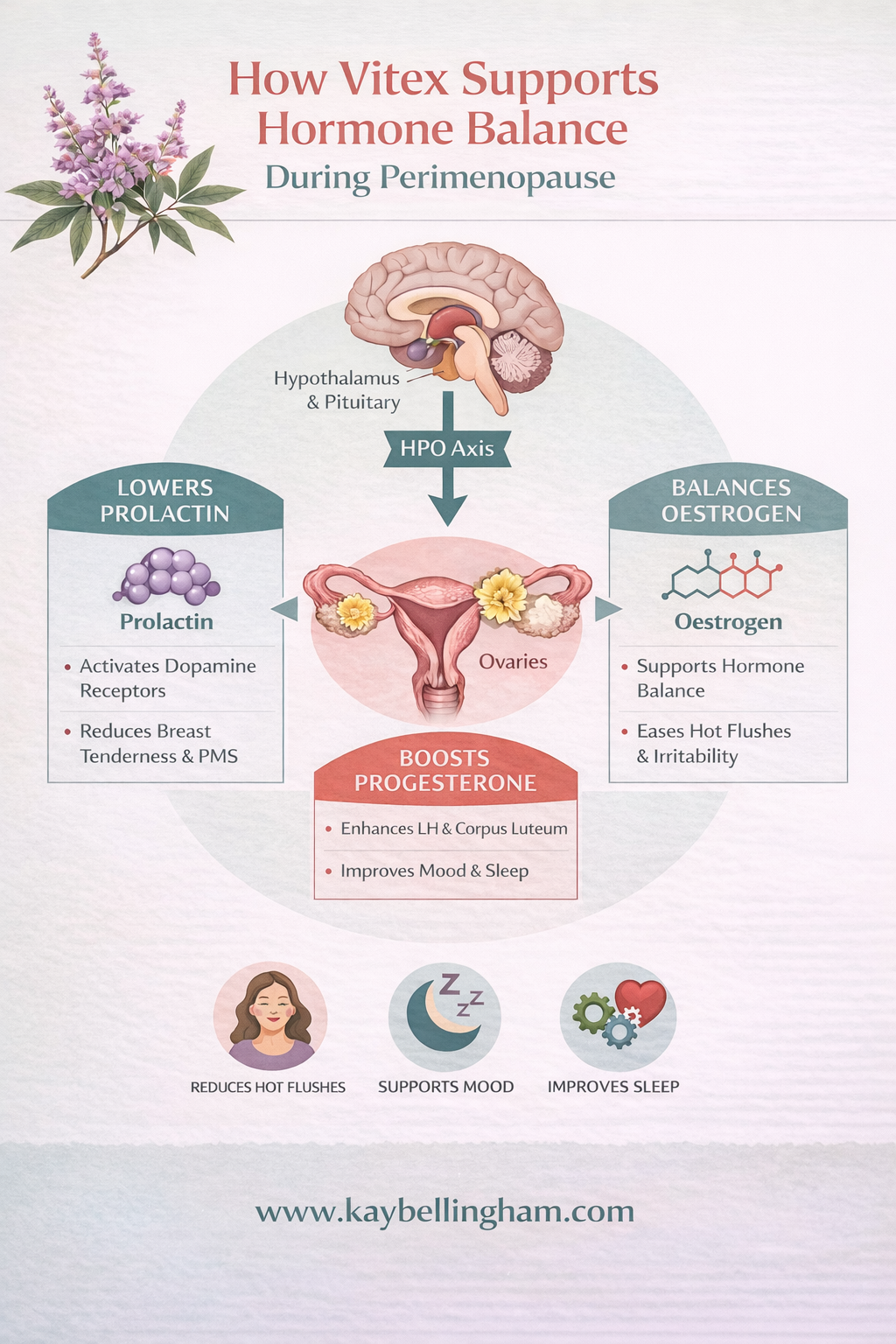
Neurotransmitters & mood support
Vitex may also influence gamma‑aminobutyric acid (GABA) pathways in the brain. GABA is a calming neurotransmitter that helps regulate anxiety, sleep and nervous system balance. Supporting these pathways may help ease mood swings and improve sleep quality during the menopause transition.
Hormone & brain chemistry glossary
Dopamine: A brain chemical that helps regulate mood and hormone signalling. It naturally suppresses prolactin release from the pituitary gland. Also involved in reward and motivation.
GABA: Gamma‑aminobutyric acid is a calming neurotransmitter that supports relaxation, sleep and nervous system balance.
Prolactin: A hormone produced by the pituitary gland. Elevated levels can contribute to breast tenderness, mood changes and hormonal imbalance.
Oestrogen: A key female hormone that supports reproductive, metabolic and brain health. Levels fluctuate significantly during perimenopause.
Progesterone: Often called the calming hormone. It supports sleep, mood stability and menstrual cycle regulation.
Luteinising Hormone (LH): A hormone released by the pituitary gland that triggers ovulation and supports progesterone production.
Follicle Stimulating Hormone (FSH): A hormone that stimulates ovarian follicles and rises during the menopause transition as ovarian function declines.
Hypothalamus‑Pituitary‑Ovarian (HPO) Axis: The communication network between the brain and ovaries that regulates hormone production and reproductive function.
Supporting the menopause transition
The Menopause Transition Bridge Method™ views menopause as a predictable health transition rather than a sudden problem. Supporting hormone signalling pathways, brain chemistry and lifestyle factors early can help smooth this transition and reduce long‑term health risks associated with hormonal decline.
Vitex may be one part of a broader strategy that includes other herbs, nutrition, lifestyle support, stress management and personalised clinical care.
Referenced from:
Naseri M. et al. (2019). Effects of Vitex agnus‑castus on menopausal symptoms: randomised controlled trial.
Gharabaghi M. et al. (2011). Evaluation of Vitex agnus‑castus in menopausal symptom management.
Blatt‑Kupperman Menopause Index clinical trials.
Menopause Rating Scale (MRS) clinical evaluations.