
Rhapontic Rhubarb Extract (ERr 731) for menopause symptom relief
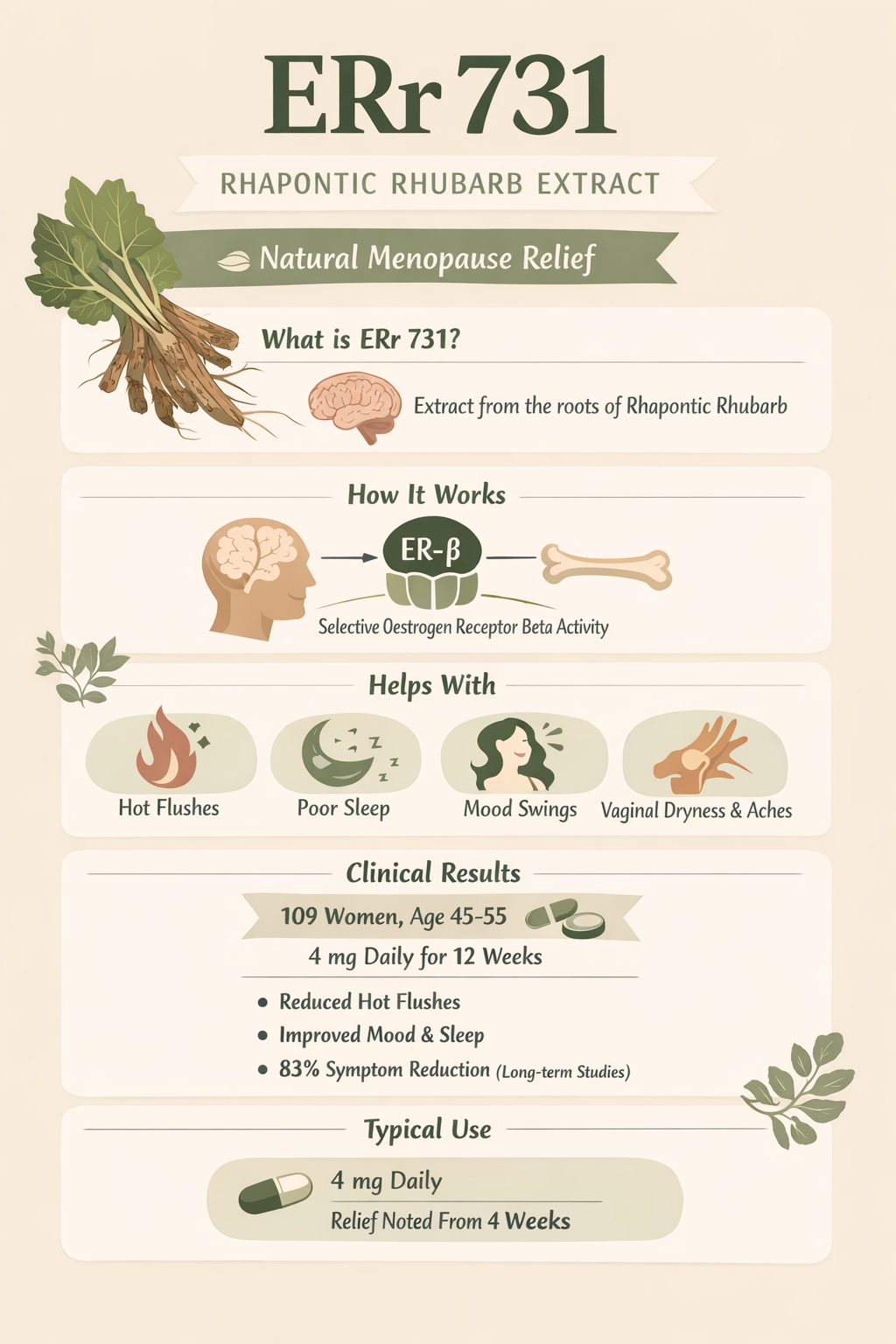
ERr 731 is a standardised extract taken from the root of Rheum rhaponticum, also known as rhapontic rhubarb or Siberian rhubarb. It is a non‑hormonal, plant‑based option used to help relieve menopausal symptoms, particularly during perimenopause and early postmenopause. Unlike conventional menopausal hormone therapy, ERr 731 does not supply hormones. Instead, it appears to work by selectively interacting with oestrogen receptor beta, a receptor found in the brain, bones, blood vessels and other tissues involved in menopausal symptoms.

Oestrogen receptors
This selective activity is important. Oestrogen receptors are not all the same. ERr 731 appears to favour oestrogen receptor beta rather than oestrogen receptor alpha. This may help explain why it can support symptom relief without the same stimulatory effects associated with oestrogen‑sensitive tissues such as the breast and uterus in preclinical and clinical observations. In simple terms, it seems to provide some of the helpful signalling effects of oestrogen without acting like a hormone replacement product.
Clinical uses of ERr 731
Clinically, ERr 731 is most often used for women experiencing hot flushes, night sweats, poor sleep, irritability, anxiety, fatigue, vaginal dryness, low libido and joint or muscle discomfort. It may be especially useful for women who want a non‑hormonal option, cannot use hormone therapy, or prefer a well‑studied herbal ingredient with a simple once‑daily dose.
ERr 731 clinical studies
The main studied dose is 4 mg once daily. In a 12‑week randomised, double‑blind, placebo‑controlled trial involving 109 perimenopausal women aged 45 to 55 years, ERr 731 significantly reduced the number and severity of hot flushes and improved multiple symptoms on the Menopause Rating Scale (MRS), including sleep disturbance, irritability, exhaustion, vaginal dryness and joint or muscle complaints. Improvements were noted from around 4 weeks, with stronger results by 12 weeks.
Longer‑term data is also encouraging. In one observational study of 363 peri‑ and postmenopausal women, one 4 mg tablet daily for 6 months reduced total MRS scores from 14.5 to 6.5. In a long‑term follow‑up, 51 women continued 4 mg daily for a further 22 months, with an overall symptom reduction of approximately 83% and no reported changes in gynaecological safety findings such as endometrial hyperplasia or breast tissue abnormalities.
Safety & tolerability
ERr 731 is generally well tolerated. Reported adverse effects are uncommon and tend to be mild, such as gastrointestinal discomfort. Available clinical and post‑marketing data suggest a favourable safety profile, including long‑term use, but women with a history of oestrogen‑sensitive cancers, unexplained vaginal bleeding, or those taking multiple medications should speak with their health professional before use.
Summary
Overall, ERr 731 may be best suited to perimenopausal or early postmenopausal women with moderate vasomotor, mood and sleep‑related symptoms who are looking for a non‑hormonal, evidence‑based option. It is not a substitute for individual medical care, but it may offer meaningful symptom relief for the right woman when chosen carefully and used consistently.
References:
Shah J, Chandanani S, Reddy J, et al. Journal of Mid-life Health. 2021;12(2):108‑115.
Heger M, et al. Menopause. 2006;13(5):744‑759.
Hasper I, et al. Menopause. 2009;16(1):117‑131.
Kaszkin‑Bettag M, et al. Alternative Therapies in Health and Medicine. 2009;15:24‑34.
Wober J, et al. Journal of Steroid Biochemistry and Molecular Biology. 2007;107:191‑201.
Dubey VP, Sureja VP, Kheni DB. Journal of Biomedical Research. 2024;38(3):278‑286.