
Shatavari extract (SRI-81) for perimenopause & menopause
Shatavari (Asparagus racemosus) is a traditional Ayurvedic herb long used to support female reproductive health. Often called the ‘Queen of Herbs’, it has historically been used to help women maintain hormonal balance and vitality during periods of hormonal change such as perimenopause and menopause. Modern research is now investigating standardised extracts such as SRI‑81 to better understand their potential role in supporting women during the menopause transition.

What is Shatavari SRI-81?
Shatavari is derived from the root of the Asparagus racemosus plant. Its key active compounds are steroidal saponins known as shatavarins. These compounds appear to have phytoestrogenic properties, meaning they can interact with oestrogen receptors and potentially help support hormonal signalling when oestrogen levels decline during menopause.
Standardised extracts such as SRI‑81 typically contain at least 10% shatavarins and are produced using controlled extraction methods to ensure consistent potency and quality.
Mode of action
Research suggests several mechanisms by which Shatavari may support women during menopause:
• Phytoestrogenic activity through
interaction with oestrogen receptors
• Support for hormonal balance including oestradiol and FSH signaling
• Adaptogenic effects that help the body adapt to physical and emotional stress
• Antioxidant and anti‑inflammatory actions that support overall wellbeing
Clinical research
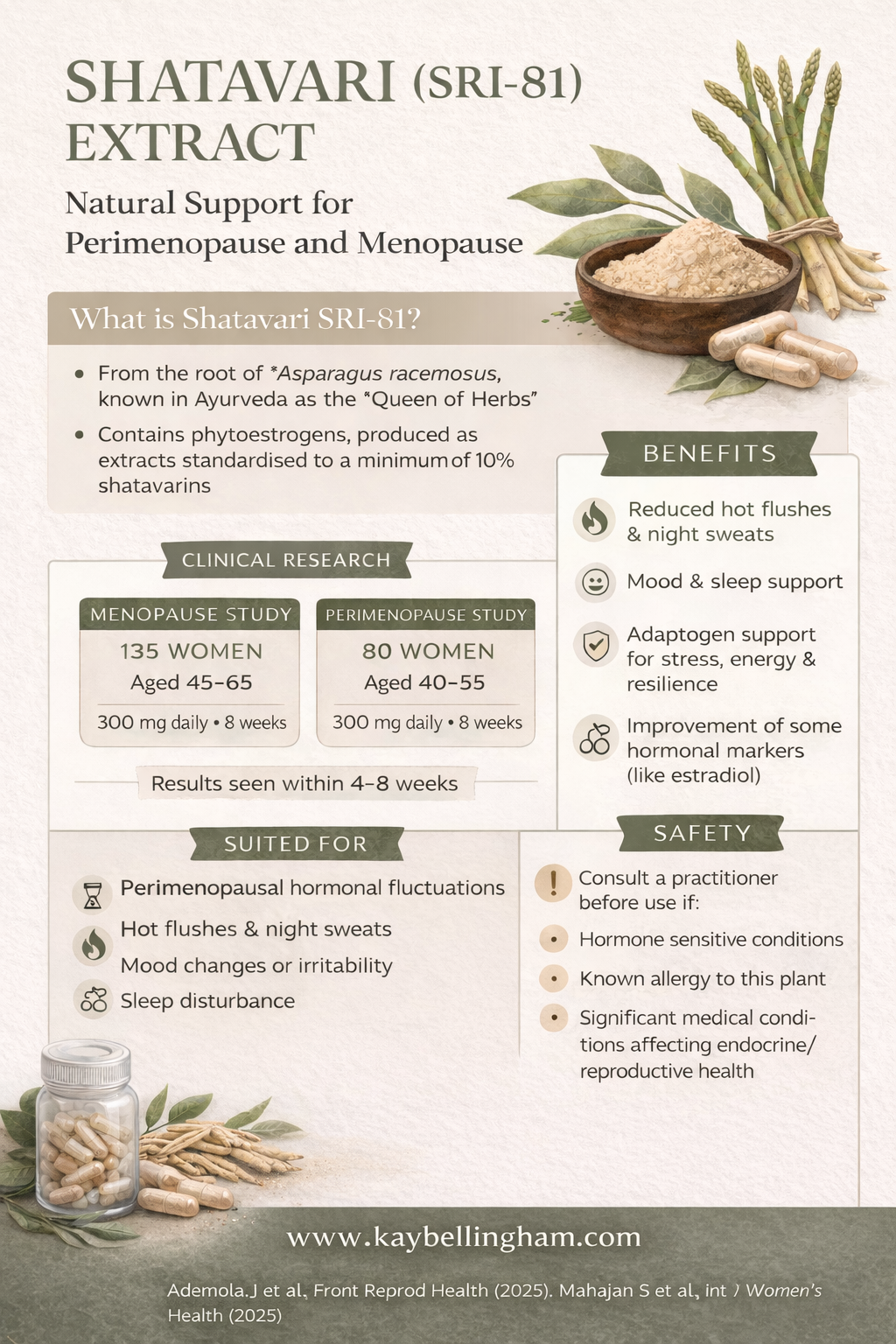
A randomised double‑blind placebo‑controlled clinical trial published in 2025 investigated the effects of Shatavari root extract in 135 women aged 45–65 years experiencing menopausal symptoms. Participants received either 300mg of Shatavari extract daily, a combination of Shatavari and Ashwagandha (KSM-66) or placebo for eight weeks.
Results showed significant improvements in overall menopause symptom scores including psychological, somatic (physical) and urogenital symptoms. Improvements were observed by week four and were more pronounced by week eight. Participants also reported improvements in perceived stress and mood.
Perimenopause study
Another placebo‑controlled study examined 80 women aged 40–55 years experiencing perimenopausal symptoms. Participants took 300mg of a standardised Shatavari extract daily for eight weeks. Compared with placebo, women taking the extract experienced significant reductions in menopausal symptoms, improvements in quality-of-life scores and reductions in perceived stress.
Some hormonal markers such as oestradiol also showed improvements.
Who may benefit from Shatavari
Shatavari extracts such as SRI‑81 may be helpful for women experiencing:
• Perimenopausal hormonal fluctuations
• Hot flushes and night sweats
• Mood changes or irritability
• Sleep disturbances
• Fatigue during the menopause transition
Safety & tolerability
Clinical trials suggest Shatavari extracts are generally well tolerated with only mild adverse effects reported including nausea, headache or digestive upset. Taking with food should help to reduce this risk. However, herbal medicines are not suitable for everyone. Women with hormone‑sensitive conditions or those taking prescription medications should seek health professional advice before use.
Summary
Emerging research suggests that standardised Shatavari extracts such as SRI‑81 may provide a natural option for supporting women during the menopause transition. By helping to modulate hormonal signalling and support stress resilience, Shatavari may assist in managing common menopausal symptoms as part of a holistic health approach.
References:
Ademola J, Ajgaonkar A, Debnath T, et al. Efficacy and safety of Shatavari root extract (Asparagus racemosus) for menopausal symptoms: a randomized, double-blind, placebo-controlled study. Frontiers in Reproductive Health. 2025.
Mahajan S, Avad P, Langade J. Efficacy and safety of shatavari root extract for perimenopause: randomized, double-blind, placebo-controlled study. International Journal of Women’s Health. 2025.